
Video Calls in Done: AI Commercial
A 15-second LinkedIn video for Done’s video-call feature
Background
Done connects resellers, installers and customers throughout an installation. Installers can video-call customers directly from the job, and customers can show the installation location and clarify details remotely. This helps both parties prepare and avoid misunderstandings.
The task was to create a short LinkedIn video that explains the video-call feature and why it is useful, with a strong hook, a clear use case and captions that make the video work without sound.
The idea
I wanted to stop viewers mid-scroll through effective storytelling. The video makes a very small problem look like a life-or-death decision, almost like someone trying to defuse a bomb. An installer stares at an EV charger as if one wrong move would end everything. Then he video calls the customer, who answers in one sentence, and the camera pulls back to reveal an ordinary, calm garage.
The contrast between the dramatic setup and the simple solution creates the humour and keeps people watching. The practical message is clear without any explanation: a video call resolves installation questions faster.
The hook
The first frame is an extreme close-up of the installer’s eyes, with thriller music from the very first second. Viewers don’t know what is wrong, so they keep watching to find out. The payoff comes at second 8.5, when the music stops dead.
Why this use case
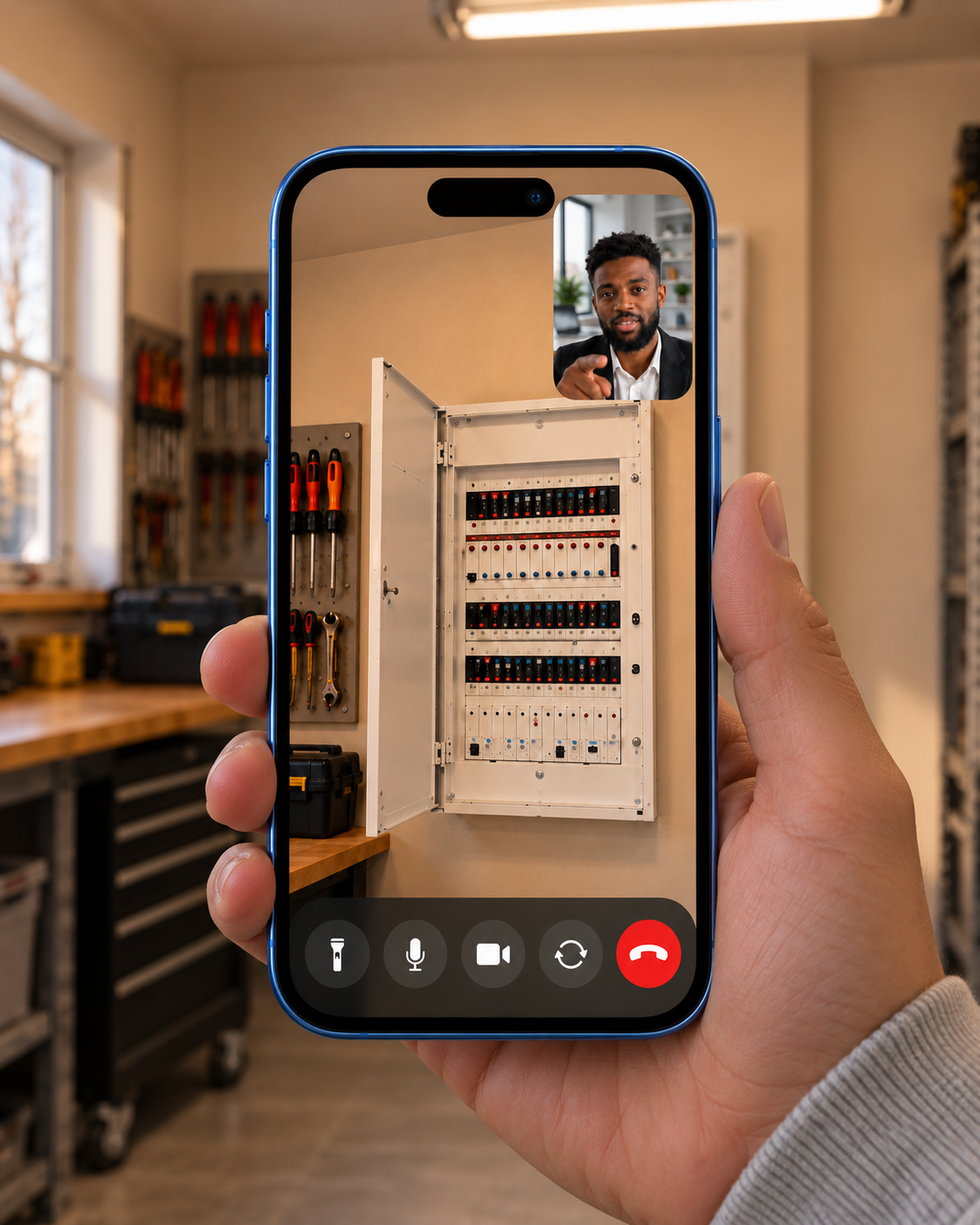
The installer is on site, unsure which fuse the EV charger belongs to. The customer can clarify it from anywhere, so I placed him in an office. The video call screen follows Done’s own layout: what the installer sees in the large window and the other person in a small window in the upper-right corner.
Captions and sound
Captions are used only for the two spoken lines and the end card, so the video works with the sound off. The music builds up and stops exactly when the customer answers. The silence is the joke.
A note on the logo
Done’s logo is licensed, so in this portfolio version I replaced it with my own logo on the end card. In a real delivery, Done’s official logo would go in the same place.
The process
The process
AI development and visual references
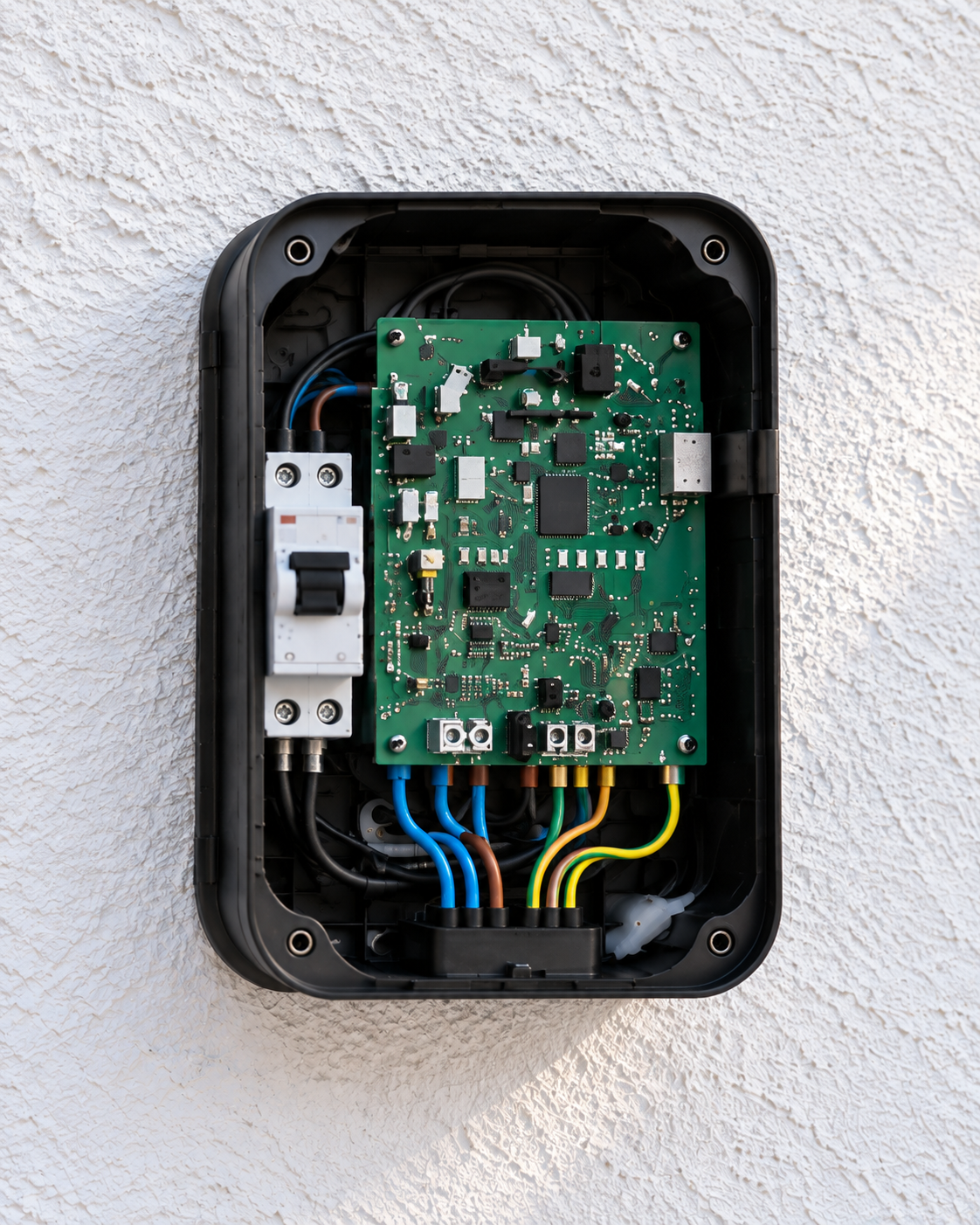
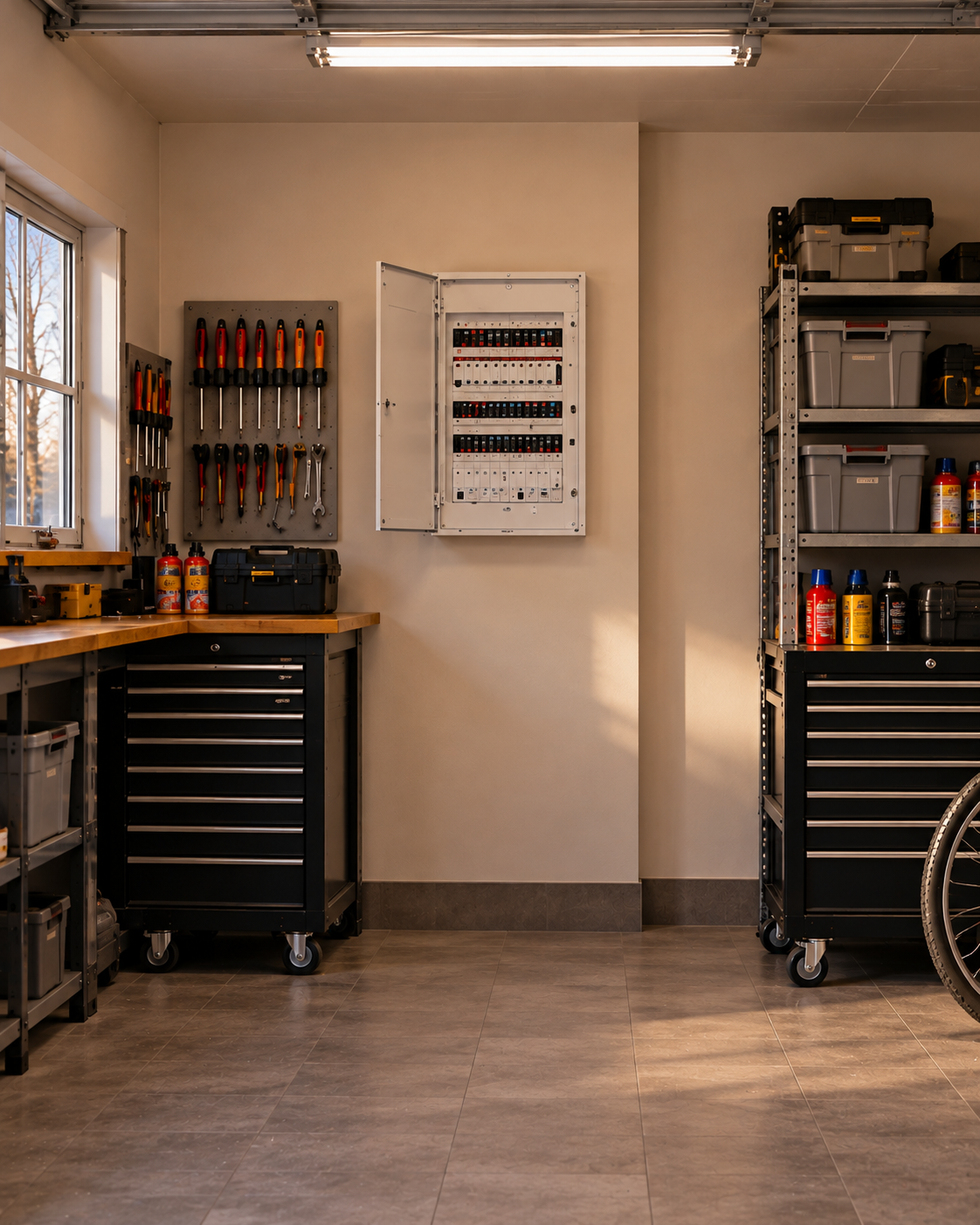
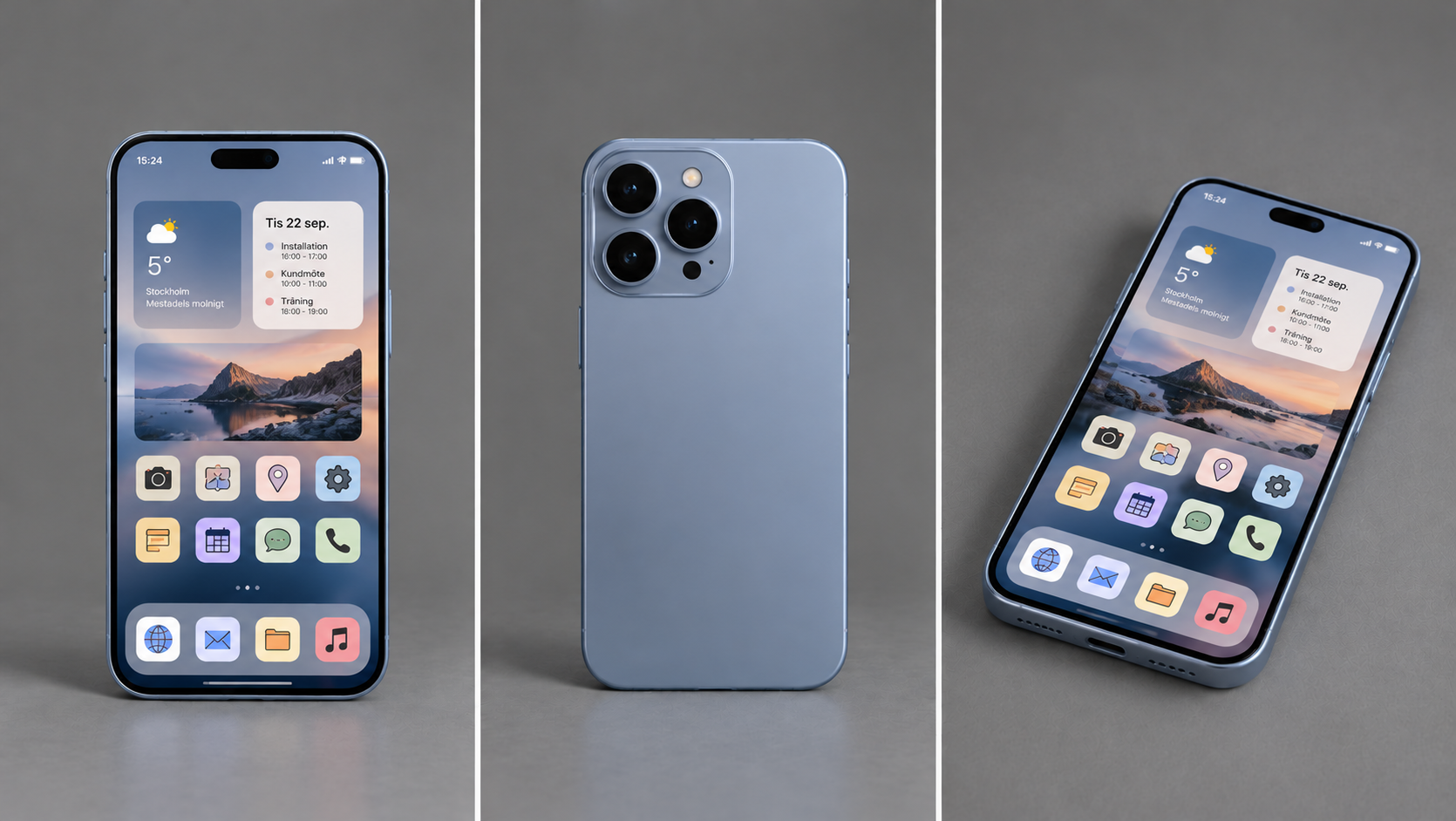
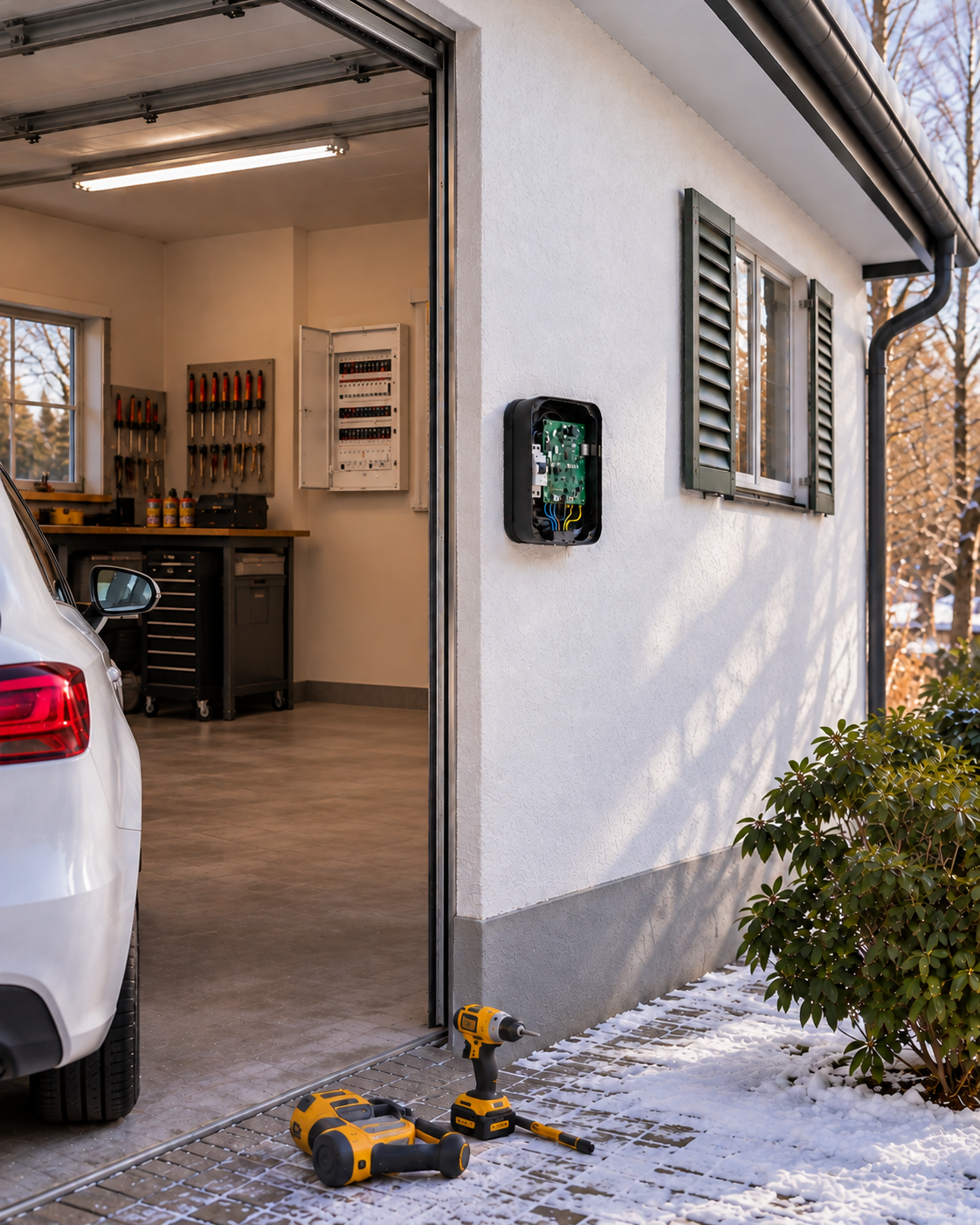
I first developed the seven core visual elements for the commercial: the @installer, the @customer, the @evstation (EV charger), the @phone, the @videocall screen, and two locations, @garage and @outsidegarage. I created the reference images with ChatGPT Image 2 and saved them as elements in Higgsfield, focusing on establishing a consistent visual identity for each element before generating the final video.
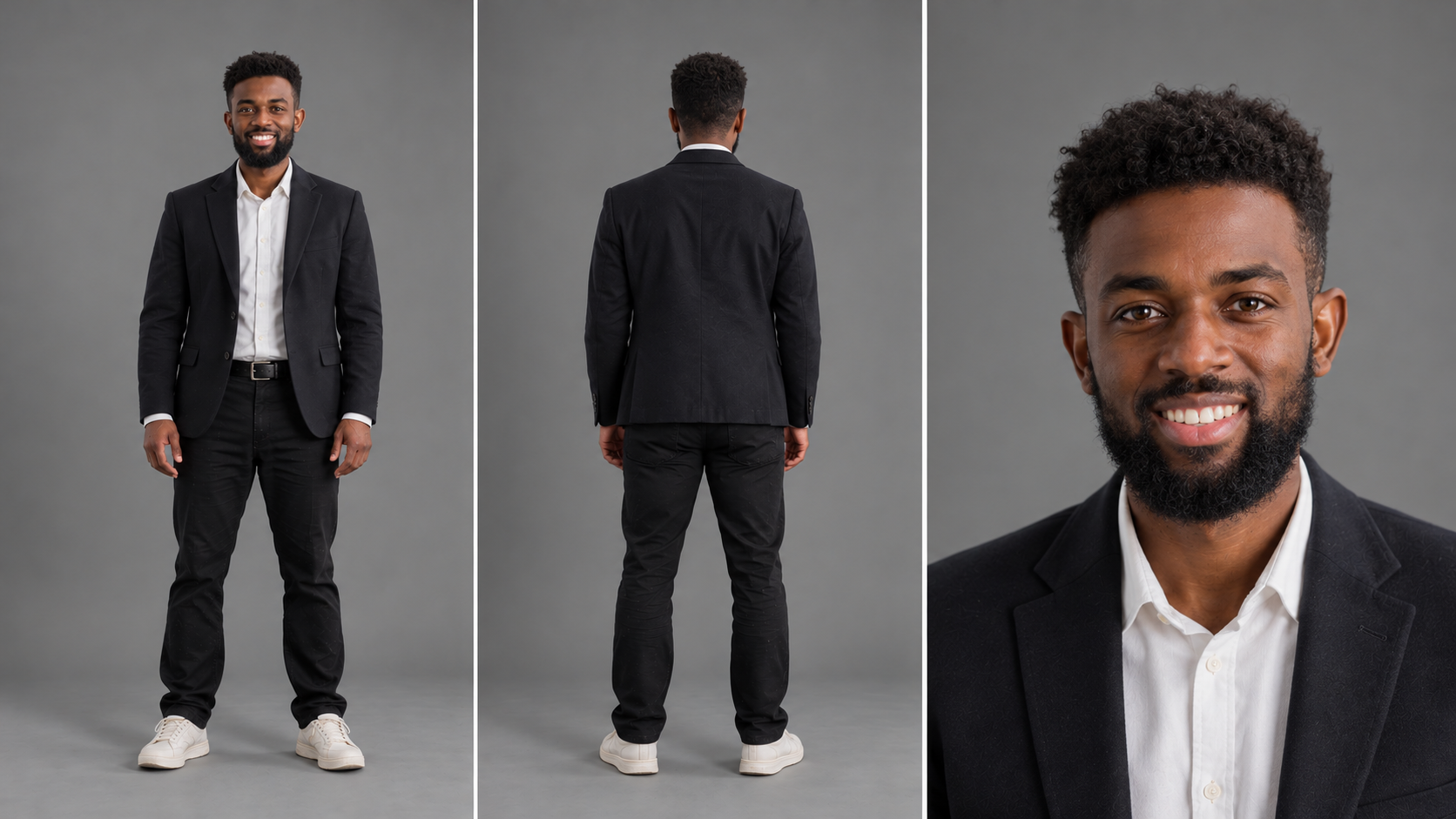
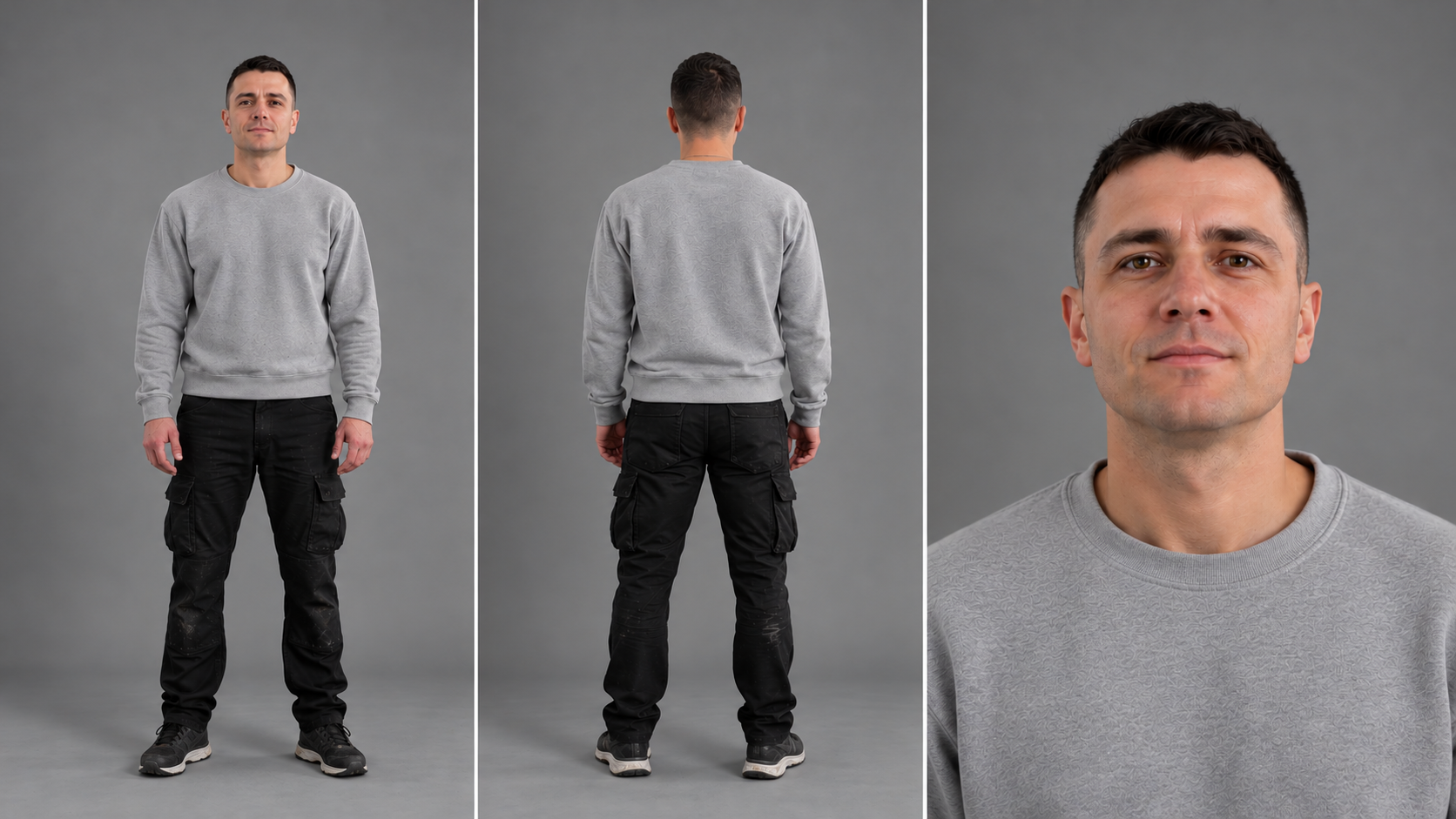
For the two characters, I created reference sheets with a full-body front view, a back view and a close-up portrait. This let me establish their appearance from several perspectives and reduce inconsistencies in facial features, hairstyle, body proportions and clothing when generating the video. The reference images are provided in the gallery below.
I then used these references together with a detailed cinematic prompt to control the characters, environment, product, camera direction and audio throughout the sequence. The prompt specifies the lens, distance and angle for every shot, the exact timing of each beat, and a full audio plan with the music, sound effects and dialogue. The full prompt can be found below the gallery of the reference images.
The video was generated using Seedance 2.5 in Higgsfield, with native audio.
One scene needed a second attempt. In the first result, the video call shot did not match what I wanted: the phone was off-centre. I created a new reference image with the phone held in one hand in front of the real garage, and generated that scene separately with exactly the same timing, so it fit back into the edit.
The final video was edited in Adobe Premiere Pro, where I added the captions, the end card, colour correction and the 4:5 crop for LinkedIn.
Tools
Higgsfield
Element library and video generation platform
ChatGPT Image 2
Creation of visual reference images
Seedance 2.5
Video generation and animation, with native audio
Claude
Concept development, structure and writing of the video prompts
ChatGPT
Brainstorming, headline and image prompts
Adobe Premiere Pro
Editing, captions, colour correction and 4:5 crop
Adobe After Effects
[Caption and end card animation, adjust if needed]
Adobe Illustrator
[End card layout and my own logo, adjust if needed]
Time spent
3 hours
Prompt
@installer is the man in the grey sweatshirt and black cargo trousers, 100% match to the reference. @customer is the man with short curly hair and beard in black blazer and white shirt, 100% match to the reference. @evstation is the black open EV charger enclosure with green circuit board, white breaker module and blue, brown, green and yellow wires, 100% match to the reference. @phone is the smartphone product reference (no logos, no branded interface). @videocall is the video call screen layout reference. @outsidegarage is the exterior location reference (white textured garage wall, green shutters, open garage door, snow, warm low winter sun). @garage is the interior location reference (beige wall, open white fuse panel with three rows of breakers, pegboard with tools, workbench, black tool chest, tiled floor). Maintain strict visual consistency with all references throughout the entire sequence.
SCENE CONTEXT
A trivial installation question is filmed like a bomb disposal thriller. An installer stands outside a residential garage, staring at an EV charger as if one wrong decision could end everything. He is sweating, tense, silent. Then he takes out his phone and video calls the customer, who sits calmly in a bright office. The installer asks one quiet question, the thriller music stops instantly, and the customer answers in one sentence. The scene then pulls back to reveal a completely ordinary, calm garage. The humour comes from the contrast between the over-dramatic opening and the mundane resolution. Acting is realistic, restrained and understated, never cartoonish, no slapstick. Mood: premium, cinematic, physically grounded.
CONTROLLED SIX BEAT SEQUENCE, FIVE HARD CUTS. Exactly 15 seconds. Real time motion. Lens locked per beat, no artificial camera drift. Preserve exact character identity, wardrobe and object design from the references. Compose every beat for the central 4:5 area of the 3:4 portrait frame.
BEAT 1 (0.0-2.0 s)
24° super telephoto lens (100 mm look), camera 1.2 meters from his face at exact eye level, 0° horizontal angle, directly facing him, camera roll 0°. Extreme close-up of @installer's eyes, brow and a sliver of forehead. Very shallow depth of field, background completely out of focus. He is intensely focused, a bead of sweat on his temple, his eyes move slowly as if reading something just outside the frame. Subtle handheld micro-movement. Dramatic contrast lighting with cool shadows and a hint of warm winter light on one side of his face.
HARD CUT
BEAT 2 (2.0-4.0 s)
20° macro telephoto lens (120 mm look), camera 40 centimeters from the wall, angled 20° downward, camera roll 0°. Extreme close-up of @evstation mounted on the white textured wall of @outsidegarage. A very slow push-in with a slow rack focus from the blue wires to the brown wires to the white breaker, as if someone is searching for an answer and cannot find it. No hands, no tools, nothing moves in the scene except the camera and the focus. The enclosure must match @evstation exactly. No sparks, no smoke, no flicker.
HARD CUT
BEAT 3 (4.0-5.5 s)
29° telephoto lens (85 mm look), camera 1.5 meters from his face, 5° below eye level looking slightly upward, 15° off his frontal axis, camera roll 0°. Tight close-up of @installer's face with an extremely slow push-in. Tense jaw, controlled breathing, a bead of sweat runs down his temple, his eyes flick towards the charger and back. Shallow depth of field.
HARD CUT
BEAT 4 (5.5-7.0 s)
47° normal lens (50 mm look), camera 1.5 meters away at chest height, 20° off his frontal axis, camera roll 0°. Medium close-up of @installer from the chest up. He freezes, then takes @phone out of his pocket with controlled urgency, holds it at chest height with the screen visible, and presses the call button with his thumb. The screen shows a generic simple video call connecting, no readable text. Restrained, believable acting.
HARD CUT
BEAT 5 (7.0-10.5 s)
Full-frame video call screen following @videocall exactly, the screen fills the frame with the phone body cropped away, flat and straight-on. LARGE main window: the installer's steady, slightly handheld camera view of the open white fuse panel with three rows of breakers from @garage. SMALL rounded inset in the UPPER-RIGHT corner: @customer sitting in a bright modern office (desk, laptop, bookshelf, plant, soft neutral daylight), calm and friendly, looking into the camera. The windows are never swapped, the customer is never in the large window, the installer is not visible in this beat. At 9.0 s the customer gives a small helpful nod as he answers.
HARD CUT
BEAT 6 (10.5-15.0 s)
63° wide lens (35 mm look), locked for the entire beat. Camera starts 1 meter from the open fuse panel in @garage at chest height, 0° roll, and performs a smooth slow pull-back of about 2 meters. It opens on a close-up of @installer's hand finishing flipping the third breaker from the left (a normal, safe switch click, no sparks), then reveals a wide, spacious, calm view of the ordinary garage with @installer standing at the panel, phone lowered in one hand. Warm natural winter light. His tense expression relaxes into mild embarrassment and relief, he gives a small acknowledging nod, glances at his phone and gives a tiny understated nod. Hold the calm composition for the last second. No new problem, no new character, no new event. The contrast with the claustrophobic opening must be obvious.
AUDIO
(Music: 0.0-8.5 s. Serious cinematic thriller score from the very first frame. Low sustained cello and string drone, slow pulsing low percussion like a heartbeat that gradually speeds up, a high tremolo violin rising in pitch and volume. It builds continuously and becomes almost absurdly dramatic, peaking at 6.5-8.5 s with layered strings, a brass swell and a held high note. At exactly 8.5 s ALL music stops instantly, with no fade, no reverb tail and no sting. No music at all from 8.5 s to the end.)
<Sound effects 0.0-7.0 s: slow controlled breathing through the nose, one small swallow, soft sweatshirt rustle, faint cold outdoor ambience, a short sharp inhale at 5.5 s, fabric movement as he pulls out the phone, a soft thumb tap, then a generic soft outgoing call tone (neutral, not any brand's ringtone).>
English, quiet tense low almost-whispering male voice, @installer, off-screen: {Which fuse is it?} spoken at 7.3-8.4 s.
<Sound effects 8.5-9.0 s: half a second of near silence with only faint room tone.>
English, warm calm friendly mid-low male voice, slightly casual, @customer, heard through the phone speaker, lips in sync with the inset: {The third one from the left.} spoken at 9.0-10.2 s, with faint office ambience behind his voice (distant keyboard, soft room tone).
<Sound effects 10.5-15.0 s: quiet garage room tone, faint fluorescent hum, one soft click of a breaker switch, soft footsteps, one short quiet slightly embarrassed exhale from the installer. The customer's voice is faintly audible and muffled from the phone, cheerful, not intelligible.>
No voice-over, no further dialogue, no alarms, no artificial comedic sound effects, no musical sting after the reveal.
VISUAL STYLE
Photorealistic premium cinematic commercial. Dramatic contrast lighting in beats 1-4, natural calm light in beat 6. Realistic skin texture, sweat, believable expressions, realistic hands. Natural depth of field. Subtle handheld imperfection in beats 1-4, smooth and stable in beat 6. Physically plausible movement.
CONSISTENCY AND CONSTRAINTS
100% character identity consistency with @installer and @customer. 100% product consistency with @evstation and @phone. 100% environment consistency with @outsidegarage and @garage. Identical hairstyle, facial features, body proportions and wardrobe in every beat. No extra people. No character morphing. No face changes. No wardrobe changes. No product redesign. No on-screen text, no subtitles, no logos, no graphics, no end card. No sparks, no smoke, no explosions, no dangerous electrical work. No warped hands. No deformed fingers. No floating objects. No morphing transitions. No artificial camera drift. No sudden changes in lighting. No unrealistic physics.
3:4 portrait composition, framed for the central 4:5 area.